

Introduction
Are you struggling with common MIG welding problems like porosity, excessive spatter, or inconsistent penetration?
Many welding defects are not just caused by technique — welding gun issues and worn consumables such as contact tips and liners can also play a major role.
In this guide, you’ll learn how to troubleshoot MIG welding issues effectively and how to improve weld quality by optimizing both your welding parameters and consumables.
Common MIG Welding Problems and Solutions
Porosity in MIG Welding: Causes and Fixes
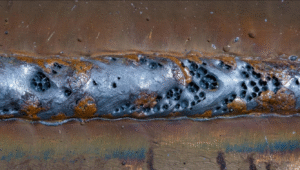
Porosity appears as small holes in the weld bead and weakens the weld structure.
Causes:
- Contaminated base metal (oil, rust, moisture)
- Poor shielding gas coverage
- Incorrect welding parameters
Consumables-related causes:
- Worn contact tipscausing unstable arc
- Low-quality welding wire introducing impurities
- Blocked or dirty liners affecting wire feeding
Solutions:
- Clean the workpiece thoroughly before welding
- Check gas flow rate (typically 20–25 CFH)
- Replace worn contact tips and liners regularly
Excessive Spatter in MIG Welding
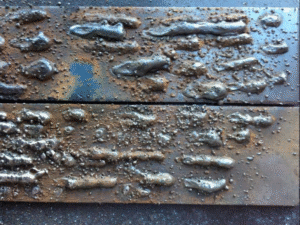
Excessive spatter leads to poor weld appearance and extra cleanup work.
Causes:
- Incorrect voltage or wire feed speed
- Improper shielding gas (pure CO₂ produces more spatter)
- Dirty work surface
Consumables-related causes:
- Worn contact tips causing arc instability
- Spatter buildup inside the nozzle
- Poor-quality welding wire
Solutions:
- Use Argon/CO₂ mix gas for smoother arc
- Adjust voltage and wire feed speed properly
- Clean or replace the welding nozzle regularly
Lack of Fusion
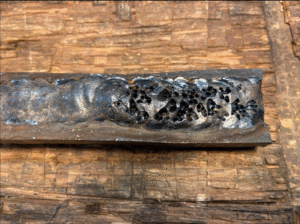
Lack of fusion occurs when the weld metal does not properly bond with the base metal.
Causes:
- Low heat input
- Fast travel speed
- Incorrect torch angle
Consumables-related causes:
- Inconsistent wire feeding due to liner issues
- Poor electrical conductivity from worn contact tips
Solutions:
- Increase voltage/amperage
- Slow down travel speed
- Maintain correct torch angle (10–15°)
Inconsistent Penetration
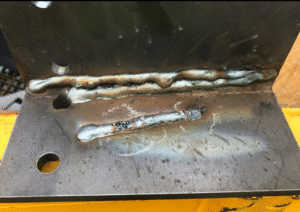
Inconsistent penetration can result in weak joints and structural failure.
Causes:
- Irregular travel speed
- Fluctuating voltage
- Poor technique
Consumables-related causes:
- Worn drive rolls or liners
- Irregular wire feeding
Solutions:
- Maintain steady travel speed
- Ensure stable machine settings
- Use high-quality consumables for consistent feeding
Common MIG Welding Gun & Consumables Problems
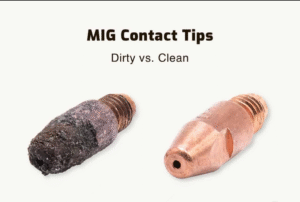
Many welders overlook this — but welding gun and consumables are often the root cause of welding problems.
Burnback (Wire Sticking to Contact Tip)
Cause:
- Incorrect wire feed speed
- Worn contact tip
Solution:
- Adjust wire feed speed
- Replace contact tip
Contact Tip Wear
Cause:
- Continuous high heat
- Poor-quality materials
Solution:
- Use durable, high-quality contact tips
- Replace regularly to maintain arc stability
Liner Blockage
Cause:
- Dust, debris, or metal particles inside liner
Solution:
- Clean or replace liner
- Keep wire clean before feeding
Nozzle Clogging
Cause:
- Spatter buildup blocking gas flow
Solution:
- Clean nozzle frequently
- Use anti-spatter spray if needed
Best Practices for MIG Welding Troubleshooting
- Always clean base materials before welding
- Use proper shielding gas (Ar/CO₂ mix recommended)
- Check voltage and wire feed speed regularly
- Maintain correct stick-out (10–15 mm)
- Replace worn consumables (contact tips, liners, nozzles)
FAQ: MIG Welding Troubleshooting
Q1: What causes porosity in MIG welding?
A: Contamination, poor gas shielding, or worn consumables like contact tips.
Q2: How do I reduce spatter in MIG welding?
A: Use proper gas mix, adjust settings, and keep your nozzle clean.
Q3: Why is my MIG welding gun not feeding wire smoothly?
A: It may be due to liner blockage or worn drive rolls.
Q4: How often should I replace contact tips?
A: It depends on usage, but frequent wear can lead to unstable arc and poor weld quality.
Conclusion
Troubleshooting MIG welding problems is not just about adjusting machine settings — it also requires proper maintenance of your welding gun and consumables.
Using high-quality contact tips, liners, and nozzles can significantly improve arc stability, reduce defects, and enhance overall welding performance.
Looking for reliable MIG welding guns and consumables?
We provide durable, high-performance welding accessories designed to deliver consistent results and longer service life.
Contact us today to get expert recommendations for your welding needs.